Energy waste is less visible than material waste, but it can be just as costly. Across construction, infrastructure, utilities and large estates, temporary power can become a blind spot in energy and carbon strategies.
Diesel generators are often specified around a site’s maximum demand. In practice, they may spend much of the day running at low loads to support welfare cabins, security huts, heating, lighting and small equipment. Fuel is consumed even when relatively little useful energy is required, while engine hours increase so do servicing, refuelling, noise and emissions.
A more effective temporary energy strategy follows the waste hierarchy: avoid unnecessary demand, accurately size the system, store surplus energy and measure and report on performance.
Solar hybrid generators and battery energy storage systems enable this by separating generation from consumption. Solar PV charges a battery, which supplies the site silently during lower-demand periods. The backup generator operates only when the battery state of charge or site load requires it, rather than running continuously.
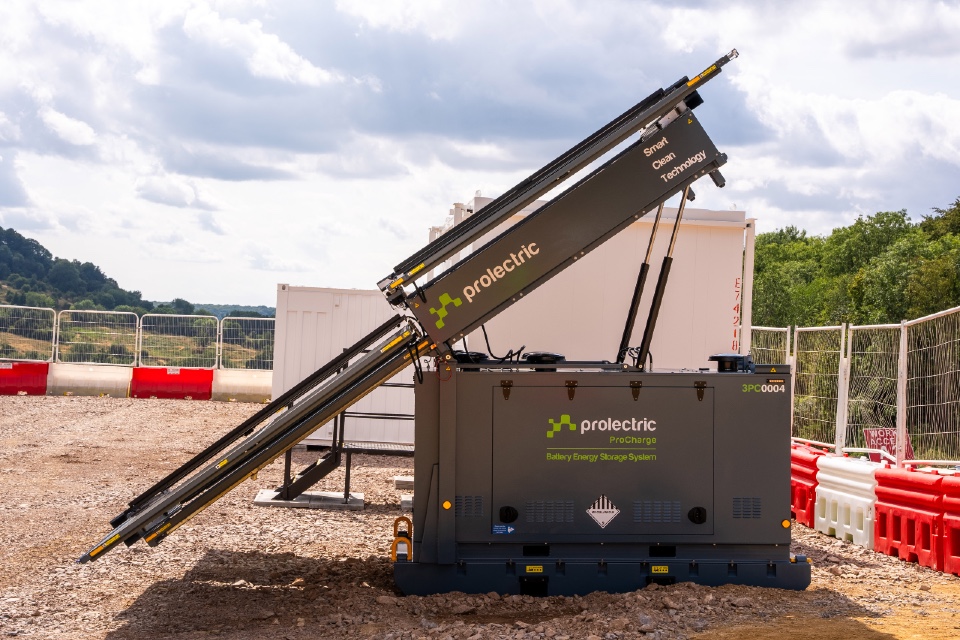
Prolectric’s ProPower combines a 3.04 kW deployable solar array, 35 kWh battery and automated HVO-compatible generator backup. For larger three-phase applications, ProCharge provides 120 kWh of battery storage, 5.28 kW of integrated solar and intelligent generator support. Remote monitoring records solar yield, consumption, battery performance, generator runtime, fuel use and carbon savings, giving energy teams evidence rather than estimates.
On Kier’s A417 Missing Link project, ProPower solar hybrid generators replaced diesel units running 24/7 and delivered fuel savings of more than 75%, even during the winter. A ProCharge supporting a large cabin setup later saved more than £220 per day in fuel at peak performance, helping drive a wider rollout of solar lighting, hybrid generators and battery storage.
Before procuring temporary power, ask: What is the genuine continuous load? How long do peak loads last? Which power outputs can be scheduled or switched off? Could stored energy cover nights and low-demand periods? How will actual performance be reported?
Reducing waste also means removing avoidable fuel use and managing temporary power without limiting the power availability on your site.
Read the A417 Missing Link case study:
https://prolectric.co.uk/case-studies/kier-a417-missing-link-project/
Explore Prolectric’s off-grid power solutions:
https://prolectric.co.uk/power-generators/
Book a Free Trial:
https://prolectric.co.uk/free-trial