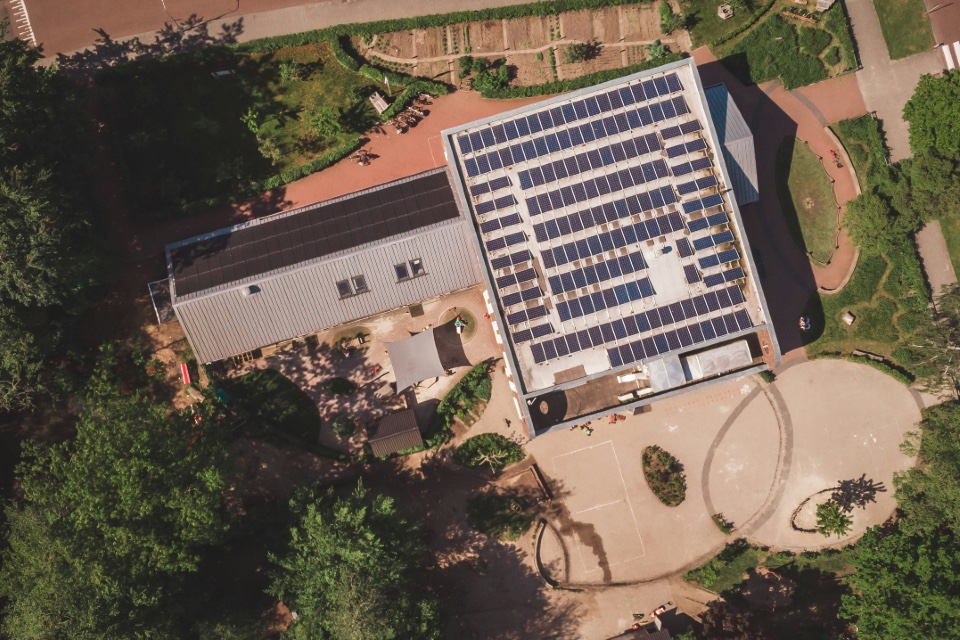
As the UK pushes toward net-zero, organisations across both the private and public sectors are facing increasing pressure to reduce emissions, cut energy costs and strengthen resilience. For many estates attending the Energy Management Summit, from hospitals and universities to manufacturing sites and corporate campuses, the most impactful lever is on-site renewable energy generation. They have become a strategic infrastructure asset, essential to long-term decarbonisation, energy security and cost stability…
Decarbonisation Through Local Generation
On-site renewables allow FM and energy leaders to directly replace carbon-intensive grid electricity with clean, self-generated power. Rooftop solar PV, ground-mounted arrays, solar carports, small-scale wind turbines and hybrid systems are all contributing to major carbon reductions across estates.
With electricity prices still volatile and grid decarbonisation slowing, organisations are increasingly prioritising local control over energy supply. Every kWh generated on-site reduces Scope 2 emissions, supports ESG commitments and improves long-term planning certainty.
For public-sector organisations, many bound to ambitious local authority or NHS net-zero targets, on-site renewables are becoming an operational necessity rather than a sustainability option.
Driving Down Operational Costs
The financial case for on-site renewables has strengthened significantly. Falling technology costs, rising grid charges and improved efficiency mean payback periods for solar PV often sit between 3–6 years, depending on system size, orientation and funding model. In addition to direct energy savings, FM leaders are leveraging renewables to:
- Reduce peak demand charges
- Offset increasing Distribution Use of System (DUoS) and Transmission Use of System (TNUoS) fees
- Support heat pump electrification strategies
- Power EV charging infrastructure with clean energy
For many estates, the combination of renewables with smart controls and battery storage is delivering double-digit reductions in operational energy spend.
Resilience: A New Priority for FM
Energy resilience has become a core element of facilities strategy. On-site renewables — especially when combined with BESS — allow campuses to:
- Maintain critical operations during outages
- Reduce reliance on unstable grid supply
- Support microgrid and islanding capability
- Future-proof against price shocks and policy changes
This resilience is particularly valuable for hospitals, data centres, logistics hubs and education estates with high reliability requirements.
Aligning with Stakeholder Expectations
Boards, investors, regulators and the public now expect clear, demonstrable progress against sustainability commitments. On-site renewables support:
- ESG reporting
- SECR and net-zero frameworks
- Planning and procurement compliance
- Climate risk disclosures
Facilities teams are increasingly central to delivering these outcomes, positioning on-site renewables as a board-level priority.
A Foundation for the Future Energy Estate
On-site renewables are becoming the foundation of the next-generation energy estate, enabling decarbonisation, lowering costs and improving operational resilience.
In 2026, the organisations that move fastest, and integrate renewables deepest into facilities strategy, will be those best positioned to meet both current and future challenges.
Are you searching for On-Site Renewables for your organisation? The Energy Management Summit can help!
Photo by Vasilios Muselimis on Unsplash