A landmark renewable energy project at one of the UK’s best-known listed buildings is demonstrating how carefully designed solar installations can help heritage estates reduce carbon emissions without compromising historic architecture.
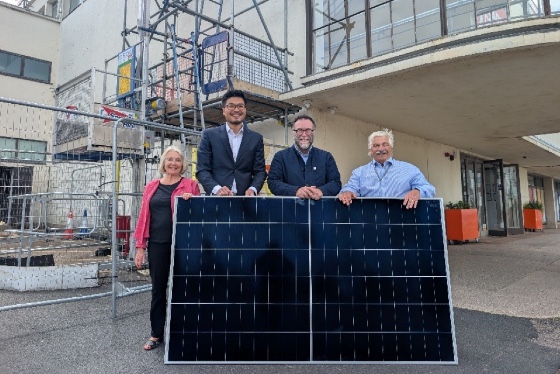
Commercial solar specialist Absolar has completed the installation of 144 lightweight solar panels on the Grade I listed De La Warr Pavilion in Bexhill-on-Sea, creating a 77.7kWp system capable of generating around 71,570kWh of electricity annually, meeting approximately 20% of the venue’s annual electricity demand.
The project forms part of the Pavilion’s wider “An Icon For Everyone” transformation programme and highlights how innovative technologies are helping facilities managers overcome one of the biggest barriers to decarbonising historic estates: structural limitations.
At 7.2kg per square metre, the solar panels are believed to be the first installation of their type in the UK. Their lightweight design enabled engineers to install the array on the Pavilion’s original steel roof structure without exceeding load limits, while preserving capacity for future building upgrades and maintaining the integrity of the Grade I listed landmark.
The installation is expected to save around 18 tonnes of CO₂ each year while reducing the building’s reliance on grid electricity. The system has also been designed with future expansion in mind, incorporating GoodWe inverters that are compatible with battery storage should the Pavilion choose to add energy storage in the future.
For facilities and energy managers responsible for heritage, public sector and cultural estates, the project provides a practical example of how low-carbon technologies can be integrated into complex buildings where conventional rooftop solar may not previously have been considered feasible.
Stewart Drew, CEO and Director of the De La Warr Pavilion, described the installation as “a milestone moment” that strengthens the building’s long-term resilience while reducing its environmental impact.
The project was funded through Rother District Council’s Community Infrastructure Levy Climate Emergency Bonus Fund, reflecting the growing role local authorities are playing in supporting estate decarbonisation projects.
As organisations across both the public and private sectors seek to meet net zero commitments while managing rising energy costs, innovations such as lightweight photovoltaic technology could open up renewable energy opportunities for many buildings previously considered unsuitable for solar installations.
Image credit: De La Warr Pavilion