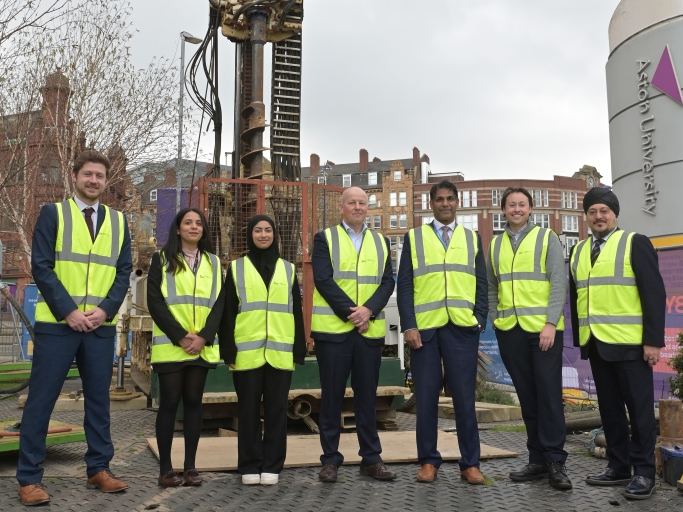
Aston University has begun construction of a new Carbon Neutral Energy Centre, marking a significant step forward in decarbonising large-scale estates and offering a model for energy management leaders across the UK.
The Birmingham-based project, supported by a £35.5 million grant through the UK Government’s Public Sector Decarbonisation Scheme, will replace the university’s existing gas-fired heating system with a combination of ground and air source heat pumps. The system will underpin a low-carbon district heating network across campus.
The scheme highlights the growing shift away from fossil fuel-based heating toward electrified, networked solutions that improve both resilience and efficiency. The project also includes building fabric upgrades, with insulation improvements designed to reduce overall heat demand: an increasingly critical component of estate-wide decarbonisation strategies.
Once complete, the initiative is expected to cut Aston’s scope 1 and 2 emissions by more than 90% compared to its 2005/06 baseline. Notably, the university now expects to reach net zero for these emissions by 2028, two years ahead of its original 2030 target.
The development forms part of Aston’s wider Energy Resilience Programme, reflecting a broader trend among large estate operators to integrate energy efficiency, infrastructure modernisation and long-term sustainability planning into a single strategic framework.
For energy and sustainability leaders, the project also underlines the importance of funding and partnership models. Delivery involves collaboration between government (DESNZ), funding body Salix Finance and specialist contractors, demonstrating how public-private partnerships can unlock large-scale decarbonisation projects.
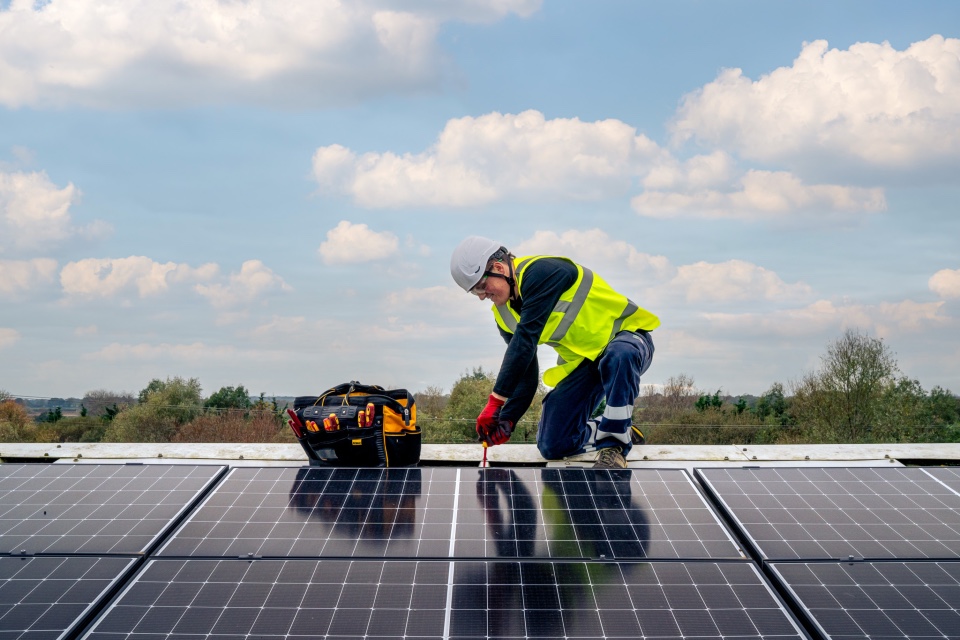
Beyond infrastructure, the scheme reinforces the role of data and system integration. Previous investments at Aston, including building management system upgrades, solar PV and LED lighting, have already reduced energy demand, providing a foundation for more advanced, system-wide optimisation.
As regulatory pressure and energy volatility continue to intensify, the project offers a clear signal: deep decarbonisation of complex estates is achievable, but requires coordinated investment, phased delivery and a focus on both supply and demand-side improvements.